
By Inside Decors · Updated January 2026
Affiliate Disclosure: This article contains affiliate links. If you make a purchase through these links, we may earn a small commission at no additional cost to you. We only recommend products we genuinely believe will benefit our readers.
Choosing the right rug can transform a room from cold and incomplete to warm and inviting. After fifteen years of designing residential spaces and working directly with homeowners, I’ve seen how a well-chosen rug anchors furniture, defines zones, and adds personality—while the wrong one collects dust in a closet. This guide draws from real projects, client feedback, and hands-on experience with dozens of rug materials and styles to help you make confident decisions for your home.
Key Takeaways
- Material matters most for longevity: Wool rugs typically last 20-30 years in high-traffic areas; polypropylene may show wear in 3-5 years
- Construction affects price and durability: Hand-knotted rugs start around $800 for 5×7 sizes; machine-made alternatives begin at $100-$200
- Size is the most common mistake: In living rooms, your rug should fit under at least the front legs of all seating furniture
- Natural fibers require commitment: Jute and sisal are beautiful but stain easily and feel rough underfoot—best for low-traffic zones
- Layering works when done intentionally: Pair a larger neutral base (jute, sisal) with a smaller patterned accent rug for depth without chaos
Understanding Rug Materials: Real-World Performance

The material you choose determines how your rug looks, feels, and performs over years of daily life. Here’s what I’ve learned from tracking rugs in client homes and my own projects.
Wool Rugs: The Gold Standard
Wool remains my top recommendation for most homes. I installed a hand-knotted wool rug in a client’s family room in 2011—it still looks excellent despite two kids, a dog, and weekly foot traffic. Wool naturally repels stains because of lanolin content, bounces back from furniture dents, and ages gracefully.
Real-world performance:
– Lifespan: 20-30 years with proper care
– Price range: $400-$3,000+ for an 8×10 rug
– Best for: Living rooms, dining rooms, bedrooms, high-traffic hallways
– Maintenance: Vacuum weekly; professional cleaning every 2-3 years ($150-$300)
Trade-offs: Initial cost is high, and some people find wool slightly scratchy. Moths can damage wool if rugs are stored improperly.
Cotton Rugs: Budget-Friendly and Washable
Cotton rugs work beautifully in casual spaces where you need frequent cleaning. I use flat-weave cotton rugs in my own kitchen—they’re machine-washable and cost $50-$200 for standard sizes.
Real-world performance:
– Lifespan: 3-7 years depending on traffic
– Price range: $50-$400 for an 8×10 rug
– Best for: Kitchens, kids’ rooms, entryways, rental properties
– Maintenance: Machine wash small sizes; vacuum and spot-clean larger rugs
Trade-offs: Cotton shows wear faster than wool, can fade in direct sunlight, and may develop permanent creases. Not ideal for formal spaces.
Shop cotton area rugs on Amazon
Silk Rugs: Luxury With Limitations
I’ve specified silk rugs for exactly three projects—all formal dining rooms with minimal foot traffic. Silk creates stunning visual depth and sheen, but it’s fragile and expensive ($2,000-$15,000+ for quality pieces).
Real-world performance:
– Lifespan: 15-25 years in low-traffic areas
– Price range: $2,000-$15,000+ for an 8×10 rug
– Best for: Formal dining rooms, master bedrooms, display areas
– Maintenance: Professional cleaning only; avoid water and sunlight
Trade-offs: Silk stains easily, shows every footprint, and requires professional cleaning ($200-$500 per session). Not suitable for homes with pets or children.
Natural Fiber Rugs: Jute, Sisal, Seagrass, and Bamboo
These materials deliver beautiful texture and eco-friendly appeal, but they’re not for everyone. I learned this the hard way when a client spilled red wine on a jute rug—the stain never fully came out.
Real-world performance:
– Lifespan: 5-10 years with careful use
– Price range: $150-$800 for an 8×10 rug
– Best for: Layering under other rugs, bedrooms, low-traffic living spaces
– Maintenance: Vacuum regularly; blot spills immediately; avoid moisture
Trade-offs: These fibers feel rough and scratchy underfoot (uncomfortable for bare feet), stain permanently, and can’t handle moisture. They shed initially and may trigger allergies in sensitive individuals.
Pro tip: Use natural fiber rugs as a neutral base layer with a softer, patterned rug on top—this protects the jute while adding visual interest.
Synthetic Rugs: Polypropylene, Nylon, Polyester, and Acrylic
Synthetic rugs have improved dramatically in the past decade. Modern polypropylene rugs can mimic wool’s appearance at a fraction of the cost, making them ideal for budget-conscious projects or high-risk areas.
Real-world performance:
– Lifespan: 3-8 years depending on quality
– Price range: $100-$600 for an 8×10 rug
– Best for: Outdoor spaces, basements, playrooms, rental properties
– Maintenance: Vacuum regularly; spot-clean with mild detergent
Trade-offs: Synthetic fibers don’t feel as luxurious as natural materials, can flatten over time, and may off-gas initially. They’re also less environmentally friendly.
When synthetics shine: I always recommend polypropylene for covered patios and sunrooms—it resists moisture, mildew, and fading better than any natural fiber.
Shop polypropylene outdoor rugs on Amazon
Rug Construction Methods: How They’re Made Matters

Construction method affects durability, price, and appearance. Here’s what you need to know based on real-world performance.
Hand-Knotted Rugs: Investment Pieces
Hand-knotted rugs are tied one knot at a time—a 6×9 rug can take 6-9 months to complete. I have clients who inherited hand-knotted Persian rugs from the 1940s that still look beautiful.
Key characteristics:
– Knot count: 100-500+ knots per square inch (higher = more detail and durability)
– Price: $800-$10,000+ depending on size, origin, and knot count
– Lifespan: 50-100+ years with proper care
– Best for: Formal living rooms, dining rooms, heirloom pieces
How to identify: Flip the rug over—hand-knotted rugs show the pattern clearly on the back, and you can see individual knots.
Hand-Tufted Rugs: The Middle Ground
Hand-tufted rugs are made with a tufting gun that punches yarn through canvas backing. They’re faster to produce than hand-knotted rugs but still offer good quality.
Key characteristics:
– Production time: Days to weeks
– Price: $300-$2,000 for an 8×10 rug
– Lifespan: 10-20 years
– Best for: Bedrooms, living rooms, offices
Trade-offs: The backing can separate over time, and pile height may become uneven. Quality varies significantly between manufacturers.
Flat-Weave Rugs: Versatile and Reversible
Flat-weave rugs (including dhurries and kilims) have no pile—they’re woven like fabric. I use them constantly for layering and in casual spaces.
Key characteristics:
– Price: $100-$1,500 for an 8×10 rug
– Lifespan: 8-15 years
– Best for: Layering, dining rooms (chairs slide easily), entryways
Advantages: Reversible, easy to clean, work well under furniture, and less likely to trip people than high-pile rugs.
Machine-Made Rugs: Consistent and Affordable
Modern machine-made rugs offer remarkable quality for the price. I’ve used them successfully in dozens of projects where budget was a primary concern.
Key characteristics:
– Price: $100-$800 for an 8×10 rug
– Lifespan: 5-10 years
– Best for: Rentals, kids’ rooms, trend-driven designs you’ll change in a few years
What to look for: Check the backing—latex or synthetic backing indicates machine production. Quality varies enormously, so read reviews carefully.
Shag Rugs: Comfort Over Durability
Shag rugs (pile height 1.5-3 inches) create cozy, textured spaces but require significant maintenance. I installed a wool shag in a client’s bedroom in 2018—it still looks plush but requires monthly deep vacuuming.
Key characteristics:
– Price: $200-$1,500 for an 8×10 rug
– Lifespan: 5-12 years depending on material
– Best for: Bedrooms, low-traffic living rooms, reading nooks
Trade-offs: Difficult to vacuum thoroughly, traps dirt and allergens, and shows footprints. Not suitable for dining rooms or high-traffic areas.
Material and Construction Comparison

| Material/Type | Price (8×10) | Lifespan | Best For | Maintenance Level | Comfort Rating |
|---|---|---|---|---|---|
| Hand-knotted wool | $800-$10,000+ | 50-100+ years | Formal spaces, heirlooms | Medium | High |
| Hand-tufted wool | $300-$2,000 | 10-20 years | Living rooms, bedrooms | Medium | High |
| Machine-made synthetic | $100-$600 | 5-10 years | Rentals, kids’ rooms | Low | Medium |
| Flat-weave cotton | $100-$400 | 5-8 years | Kitchens, layering | Low | Low-Medium |
| Natural fiber (jute/sisal) | $150-$800 | 5-10 years | Layering, bedrooms | Medium | Low |
| Silk (hand-knotted) | $2,000-$15,000+ | 15-25 years | Formal dining, display | High | Medium |
| Shag (various materials) | $200-$1,500 | 5-12 years | Bedrooms, lounges | High | Very High |
Popular Rug Styles: Finding Your Aesthetic
Style trends come and go, but certain rug types have proven staying power. Here’s what works in real homes.
Vintage and Antique Rugs
Vintage rugs (20-99 years old) and antique rugs (100+ years) add instant character. I source vintage Persian and Turkish rugs for clients who want one-of-a-kind pieces with history.
What to know:
– Price: $400-$8,000+ depending on age, condition, and origin
– Where to buy: Estate sales, specialized dealers, online marketplaces (inspect carefully)
– Condition matters: Expect some wear—it adds character—but avoid rugs with holes, severe fading, or structural damage
Popular vintage styles:
– Persian (Iranian): Intricate floral patterns, rich reds and blues, high knot counts
– Turkish Oushak: Muted pastels, large-scale patterns, softer wool
– Moroccan Beni Ourain: Cream backgrounds with black geometric patterns, thick pile
Styling tip: Vintage rugs work beautifully in both traditional and modern spaces—the contrast creates visual interest. I’ve paired ornate Persian rugs with minimalist Scandinavian furniture for stunning results.
Moroccan and Beni Ourain Rugs
These rugs became trendy around 2014 and have remained popular because they’re genuinely versatile. Authentic Beni Ourain rugs are hand-woven by Berber tribes in Morocco’s Atlas Mountains.
Characteristics:
– Cream or ivory background with black or brown geometric patterns
– Thick, plush pile (often 2-3 inches)
– Price: $400-$3,000 for authentic pieces; $150-$600 for inspired versions
Best for: Modern, Scandinavian, bohemian, and transitional spaces. They soften minimalist rooms without adding visual clutter.
Authenticity note: Many “Moroccan-style” rugs are machine-made imitations. Authentic pieces have irregular patterns, natural color variations, and hand-tied fringe.
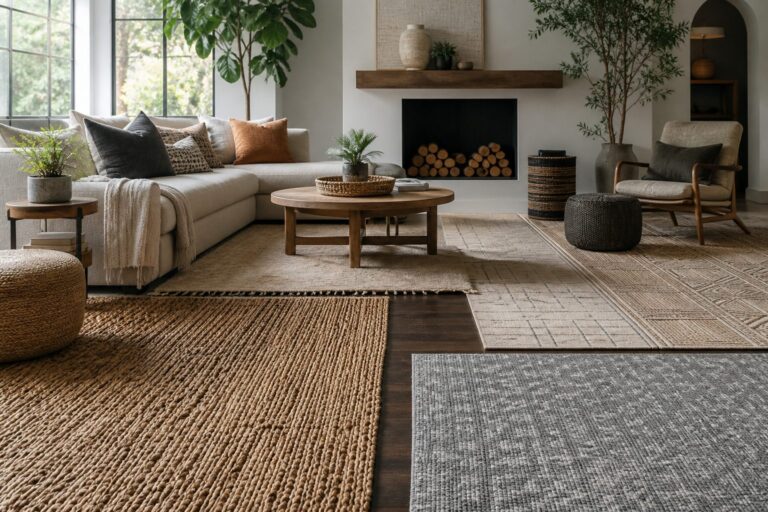
Layered Rugs: Creating Depth
Layering rugs adds dimension and allows you to combine textures and patterns. I’ve used this technique in dozens of projects, and it works when you follow these guidelines:
Successful layering formula:
1. Base layer: Larger, neutral, flat-weave or low-pile rug (jute, sisal, or solid-color flatweave)
2. Top layer: Smaller, patterned or textured rug (vintage, patterned wool, or sheepskin)
3. Size relationship: Top rug should be 2-3 feet smaller on all sides than base rug
Where it works best: Living rooms, bedrooms, home offices
Common mistakes: Layering two high-pile rugs (creates tripping hazard), using patterns that compete, or making the top layer too large (loses definition).
Sheepskin and Hide Rugs
Real sheepskin rugs add instant luxury and work as accent pieces rather than room-defining rugs. I drape them over chairs, layer them beside beds, or use them in reading nooks.
Characteristics:
– Price: $80-$400 for genuine sheepskin; $30-$100 for faux
– Size: Typically 2×3 to 3×5 feet
– Maintenance: Shake out regularly; spot-clean only; professional cleaning for deep stains
Best uses: Accent pieces, not primary rugs. They’re too small to anchor furniture and too delicate for high traffic.
Geometric and Modern Rugs
Clean-lined geometric patterns work beautifully in contemporary spaces. These rugs typically feature bold shapes, limited color palettes, and modern materials.
Best for: Modern, mid-century modern, and Scandinavian interiors
Styling tip: Geometric rugs work best when they’re the primary pattern in a room. Pair them with solid furniture and minimal accessories to let the rug shine.
Traditional Oriental and Persian Rugs
These rugs feature intricate patterns, rich colors, and centuries-old design traditions. Despite being “traditional,” they work in surprisingly modern contexts.
Characteristics:
– Complex floral or medallion patterns
– Rich color palettes (reds, blues, golds, creams)
– High knot counts and exceptional detail
Modern styling approach: Use traditional rugs in rooms with otherwise simple, modern furniture. The contrast creates sophisticated, collected spaces that feel personal rather than showroom-perfect.
How to Choose the Right Rug: A Room-by-Room Approach
Living Room Rugs
Size guidelines:
– Small rooms (under 150 sq ft): 5×7 or 6×9 rug
– Medium rooms (150-250 sq ft): 8×10 rug
– Large rooms (250+ sq ft): 9×12 or larger
Furniture placement rule: At minimum, the front legs of all seating furniture should rest on the rug. Ideally, all furniture legs sit on the rug, creating a cohesive conversation area.
Material recommendations: Wool or high-quality synthetic for durability; avoid delicate materials in high-traffic living rooms.
Common mistake: Choosing a rug that’s too small. When in doubt, size up—a too-large rug looks intentional; a too-small rug looks like a mistake.
Dining Room Rugs
Size guidelines: The rug should extend 24-30 inches beyond the table on all sides to accommodate pulled-out chairs.
Material recommendations: Flat-weave or low-pile rugs (chairs slide more easily); stain-resistant materials (spills are inevitable).
Shape consideration: Round tables look best with round rugs; rectangular tables work with rectangular rugs.
Pro tip: Measure your table with chairs pulled out, then add 48-60 inches to both length and width to determine rug size.
Bedroom Rugs
Size and placement options:
- Large rug under bed: 8×10 or 9×12 rug extends 18-24 inches beyond bed on sides and foot
- Runner on each side: Two 2.5×8 or 3×10 runners flanking the bed
- Small rug at foot: 4×6 or 5×7 rug at the foot of the bed only
Material recommendations: Soft, comfortable materials (wool, cotton, shag) since you’ll walk barefoot. This is where comfort trumps durability.
Styling tip: In master bedrooms, I prefer large rugs that anchor the bed and nightstands—it creates a cohesive, luxurious feel.
Kitchen and Entryway Rugs
Material requirements: Washable, stain-resistant, low-pile materials that won’t trip people.
Best choices: Cotton flat-weaves, indoor-outdoor polypropylene, or commercial-grade nylon.
Size for entryways: Rug should be proportional to the space—typically 3×5 to 4×6 for standard entryways.
Maintenance reality: These rugs need weekly cleaning. Choose materials you can throw in the washing machine or easily hose off.
Shop washable kitchen rugs on Amazon
Color, Pattern, and Coordination
Working With Existing Decor
The 60-30-10 rule applied to rugs:
Your rug can serve as any of these three elements:
– 60% (dominant color): Neutral rug that grounds the space
– 30% (secondary color): Rug that picks up accent colors from furniture or art
– 10% (accent color): Bold, patterned rug that serves as the room’s focal point
For more on this principle, see our guide to the 60-30-10 decorating rule.
Pattern mixing guidelines:
- One large-scale pattern: If your rug has a bold pattern, keep other patterns (pillows, curtains) smaller and simpler
- Vary pattern types: Mix geometric with organic, stripes with florals
- Consistent color palette: Patterns work together when they share 2-3 colors
Choosing Rug Colors
Neutral rugs (cream, beige, gray, taupe):
– Pros: Versatile, hide dirt well, work with changing decor
– Cons: Can feel bland without texture or subtle pattern
– Best for: Rooms where you want furniture and art to be focal points
Bold colored rugs (navy, emerald, rust, black):
– Pros: Create instant impact, anchor spaces, hide stains
– Cons: Harder to redecorate around, may feel dated as trends change
– Best for: Rooms with neutral furniture where you want the rug to be the star
Patterned rugs:
– Pros: Hide wear and stains, add visual interest, can tie together multiple colors
– Cons: Can overwhelm small spaces, harder to coordinate with other patterns
– Best for: Larger rooms, spaces with mostly solid furniture
Light vs. dark considerations:
– Light rugs make rooms feel larger and brighter but show dirt more quickly
– Dark rugs ground spaces and hide stains but can make small rooms feel smaller
– Medium tones offer the best balance for high-traffic areas
Durability and Maintenance: Real-World Expectations
Stain Resistance by Material
Most stain-resistant (best to worst):
1. Polypropylene (synthetic)
2. Nylon (synthetic)
3. Wool (natural lanolin provides some protection)
4. Cotton (absorbs stains but washable)
5. Jute/sisal (stains permanently)
6. Silk (stains easily and permanently)
Stain treatment tips from 15 years of experience:
– Act within 5 minutes: Blot (never rub) with clean white cloth
– Water-based stains: Club soda works surprisingly well on wine and coffee
– Oil-based stains: Cornstarch absorbs grease; let sit 15 minutes, then vacuum
– Pet accidents: Enzyme cleaners are essential; avoid ammonia-based products
Maintenance Requirements
Weekly maintenance:
– Vacuum all rugs in high-traffic areas
– Shake out or vacuum small rugs
– Spot-clean spills immediately
Monthly maintenance:
– Vacuum low-traffic rugs
– Rotate rugs 180 degrees to distribute wear
– Check for moth damage on wool rugs (especially in dark, undisturbed areas)
Annual maintenance:
– Professional cleaning for wool and silk rugs ($150-$400 depending on size)
– Deep clean synthetic rugs with carpet cleaner
– Inspect for damage, loose threads, or separation
Rug pads are non-negotiable: A quality rug pad ($50-$200) prevents slipping, extends rug life by reducing wear, and adds cushioning. I’ve never regretted specifying a rug pad; I’ve always regretted skipping one.
Budget Considerations: Where to Invest and Where to Save
When to Invest in Quality
Spend more on:
– High-traffic living room rugs: You’ll use this daily for 10-20 years
– Dining room rugs: Durability and stain resistance matter here
– Heirloom pieces: Hand-knotted rugs that you’ll pass down
– Large rugs: The cost difference between cheap and quality is worth it at larger sizes
When Budget Options Work Fine
Save money on:
– Trend-driven designs: If you’ll change it in 3-5 years, don’t invest heavily
– Kids’ rooms: They’ll outgrow the design; prioritize washability over longevity
– Rental properties: Tenants may damage rugs; use affordable, replaceable options
– Layering base rugs: The top rug gets the attention; the base can be simple jute
Price Expectations (8×10 rugs, 2026 prices)
Budget tier ($100-$300):
– Machine-made synthetic
– Basic cotton flat-weaves
– Expect 3-5 years of life
Mid-range ($300-$1,200):
– Machine-made wool blends
– Hand-tufted synthetics
– Quality natural fibers
– Expect 8-12 years of life
Investment tier ($1,200-$5,000+):
– Hand-tufted wool
– Lower-knot-count hand-knotted rugs
– Designer pieces
– Expect 15-30 years of life
Heirloom tier ($5,000+):
– High-knot-count hand-knotted rugs
– Antique and vintage pieces
– Silk rugs
– Expect 50-100+ years of life
Styling Tips From Real Projects
Creating Cohesive Spaces
Rug as starting point: I often select the rug first, then pull colors for throw pillows, artwork, and accessories. This ensures everything coordinates naturally.
Balancing busy and calm: If you have a patterned rug, keep walls and large furniture pieces neutral. If you have neutral floors and rugs, add pattern through pillows, art, and window treatments.
Texture layering: Combine different textures for depth—pair a flat-weave jute rug with a plush velvet sofa and linen curtains. This creates visual interest without pattern overload.
Common Styling Mistakes to Avoid
Rug too small for the space: This is the #1 mistake I see. Measure carefully and size up when in doubt.
Ignoring rug pad: Rugs slip, wear unevenly, and feel thin without proper padding.
Matching too perfectly: Your rug doesn’t need to match your sofa exactly—coordinating colors work better than perfect matches.
Forgetting about door clearance: Ensure doors can open fully over the rug; trim doors if necessary or choose a thinner rug.
Placing rugs in direct sunlight: UV rays fade rugs quickly. Use window treatments or choose fade-resistant materials for sunny rooms.
Ignoring room proportions: Large patterns overwhelm small rooms; tiny patterns get lost in large spaces.
Integrating Rugs Into Your Overall Design
Rugs don’t exist in isolation—they’re part of your home’s complete design story. When planning your space, consider how your rug choice relates to your broader interior design style.
For example, if you’re creating a bohemian living room, layered vintage rugs with rich patterns work beautifully. In contrast, a minimalist space benefits from a single, high-quality neutral rug that adds warmth without visual clutter.
The principles that guide rug selection—proportion, balance, color harmony—are the same principles of interior design that create successful rooms overall. Understanding these fundamentals helps you make confident decisions about rugs and every other design element.
Shop This Look
Editor-picked finds to bring this style home:
- Hand-Knotted Wool Rug →Timeless craftsmanship and luxurious texture, perfect for adding warmth and sophistication.
- Jute Braided Area Rug →Natural, eco-friendly fiber offering a relaxed, bohemian, and durable foundation.
- Faux Sheepskin Throw →Adds instant softness and cozy texture, ideal for layering over existing rugs.
- Vintage Persian Runner →Unique, one-of-a-kind piece bringing history and rich color to hallways.
As an Amazon Associate we earn from qualifying purchases.
Frequently Asked Questions
What type of rug lasts the longest?
Hand-knotted wool rugs last the longest—typically 50-100+ years with proper care. The high knot count (200-500+ knots per square inch) and quality wool create exceptional durability. I’ve worked with clients who have Persian rugs from the 1940s that still look beautiful. For modern production, hand-knotted wool rugs from reputable manufacturers offer the best longevity, though they start around $800 for a 5×7 and can exceed $10,000 for larger sizes.
What size rug should I get for my living room?
For living rooms, your rug should fit under at least the front legs of all seating furniture. Measure your furniture arrangement, then choose: 5×7 or 6×9 for small rooms (under 150 sq ft), 8×10 for medium rooms (150-250 sq ft), or 9×12+ for large rooms (250+ sq ft). The most common mistake is choosing a rug that’s too small—when in doubt, size up. A rug that’s too large looks intentional; one that’s too small looks like an afterthought.
Are jute and sisal rugs comfortable to walk on?
No, jute and sisal rugs feel rough and scratchy underfoot—they’re uncomfortable for bare feet. I learned this from client feedback after specifying a sisal rug in a bedroom; the homeowner ended up layering a softer rug on top. Natural fiber rugs work best in low-traffic areas or as base layers under softer rugs. If comfort is a priority, choose wool, cotton, or synthetic materials instead. Jute and sisal excel at adding texture and eco-friendly appeal, but not comfort.
How often should I professionally clean my rug?
Wool and natural fiber rugs need professional cleaning every 2-3 years in normal conditions, or annually in high-traffic areas or homes with pets. Professional cleaning costs $150-$400 depending on rug size and material. Silk rugs require professional-only cleaning whenever they’re soiled. Synthetic and cotton rugs can often be spot-cleaned or machine-washed (for smaller sizes) without professional help. Between professional cleanings, vacuum weekly and address spills immediately to extend the time between deep cleans.
Can I use an outdoor rug indoors?
Yes, outdoor rugs (typically made from polypropylene) work excellently indoors, especially in high-traffic or high-risk areas like entryways, mudrooms, sunrooms, and kids’ playrooms. They’re stain-resistant, moisture-resistant, and easy to clean—you can literally hose them off. Modern outdoor rugs have improved dramatically in appearance and now come in attractive patterns and colors. The trade-off is that they don’t feel as soft or luxurious as wool, but for practical spaces, they’re an excellent choice.
Should I choose a patterned or solid rug?
Choose based on your room’s existing patterns and your lifestyle. Patterned rugs hide stains, wear, and dirt better than solid rugs—they’re practical for high-traffic areas and homes with kids or pets. They also add visual interest and can tie together multiple colors in a room. Solid rugs work best when you want furniture, art, or architectural features to be focal points, or when you already have significant pattern elsewhere (patterned sofa, busy curtains). In general, patterned rugs are more forgiving and versatile for most homes.
Conclusion: Making Your Rug Decision
Choosing the right rug comes down to balancing aesthetics, budget, and practical needs. Start by identifying your priorities: Do you need durability for high traffic? Comfort for bare feet? A specific color to tie your room together? Easy maintenance for a busy household?
From there, narrow your options by material and construction method, then refine by style and color. Remember that rugs are one of the most impactful design elements in your home—they define spaces, add warmth, and create visual cohesion. A well-chosen rug elevates your entire room; a poorly chosen one undermines even the best furniture and decor.
Your next steps:
- Measure your space carefully, including furniture placement
- Determine your budget and prioritize where to invest
- Consider your lifestyle needs (pets, kids, traffic levels)
- Choose 2-3 materials that fit your requirements
- Select a style that complements your existing decor
If you’re looking to create a cohesive, well-designed home, understanding rugs is just one piece of the puzzle. Explore our comprehensive guide on transforming your home into a luxurious retreat for more expert insights, or learn how to make your house feel homey with simple, effective strategies.
The right rug is out there for your space—now you have the knowledge to find it confidently.